
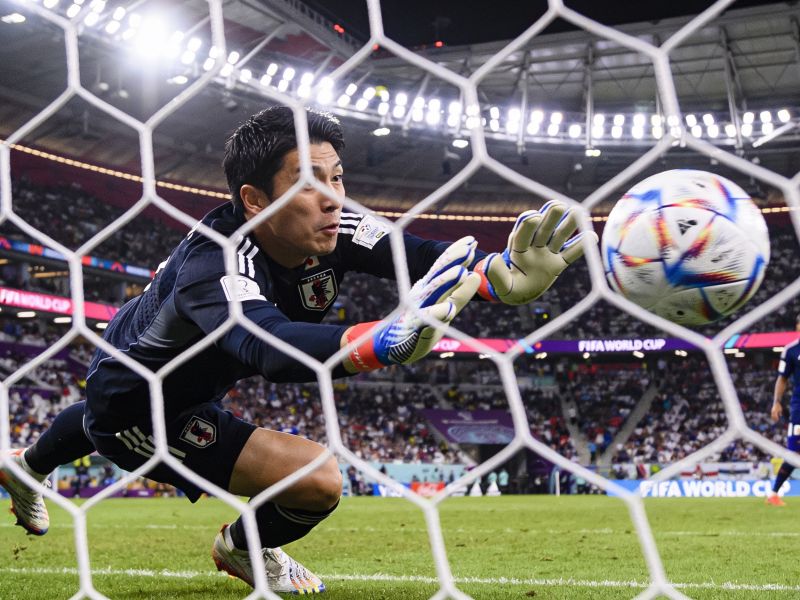
huichi Gonda became one of the defining figures of Japan’s 2022 World Cup campaign when his second-half performance helped turn a difficult match against Germany into a historic 2-1 victory. Germany controlled possession and created a series of clear chances, yet Shuichi Gonda repeatedly threw himself across the goalmouth, blocking shots with his hands。legs and chest. His four saves in a frantic spell after Japan fell behind kept the score within reach, allowing the late comeback to happen. The goalkeeper’s display was not polished in the conventional sense;it was urgent, physical and sometimes chaotic. That made it feel important. Japan needed someone willing to absorb pressure rather than simply organize it, and Shuichi Gonda supplied exactly that under intense scrutiny in Qatar.Gonda’s route to the national team was built over more than a decade of domestic competition. He developed through FC Tokyo’s youth system before becoming a regular for the senior side, winning the 2011 J.League Cup and gaining experience in continental matches. His early reputation rested on quick reactions and a strong voice behind the defense, but his career also included difficult periods. A move to Austria with SV Horn tested him outside Japan, while later spells at Sagan Tosu, Portimonense in Portugal and Shimizu S-Pulse exposed him to different tactical demands. The overseas chapter was particularly revealing. In Portugal。
Gonda had to deal with crosses, direct attacks and the physical pressure of a league where goalkeepers receive little protection. He did not transform into a flawless player overnight, but he became more adaptable, and that quality later helped Shuichi Gonda handle the contrasting styles of international football.For Japan, Gonda offered more than reflexes. He was vocal。often stepping several yards from his line to direct the defenders in front of him. Against Germany, that communication became a practical tool as Japan’s back line struggled to contain attacks from the wings. His positioning was not always elegant, and critics have pointed to moments when he appeared hesitant with the ball at his feet. Those weaknesses are part of the larger debate surrounding modern Japanese goalkeeping. Japan’s possession-based teams increasingly ask their goalkeeper to act as an extra defender, but the national side still needs a player who can make emergency saves when the tactical plan breaks down. Shuichi Gonda sits at that intersection. He represents the older, instinctive school of shot-stopping while also working within a more demanding system built around controlled buildup and aggressive pressing.That tension explains why Shuichi Gonda has remained a compelling figure even when he has not been Japan’s automatic choice for every match. Goalkeepers are judged through isolated incidents。and one mistake can dominate an entire week of coverage. Gonda has endured that cycle, responding with a visible competitiveness that has sometimes bordered on stubbornness. Teammates have valued his energy, while supporters have tended to remember the dramatic saves more than the awkward moments. His influence is also measured in the dressing room, where an experienced goalkeeper can shape defensive habits long before the cameras arrive. Japan’s next generation, including younger keepers developing in the J.League and abroad, will face a higher standard partly because of players like him. Shuichi Gonda may not fit the image of a perfect modern goalkeeper, but his career shows how resilience, communication and timely courage can matter as much as technical polish. On the biggest nights, that combination has given Japan a chance to survive pressure and change the result.